Cold vs Hot Water Laundry: What It Means for Your Health
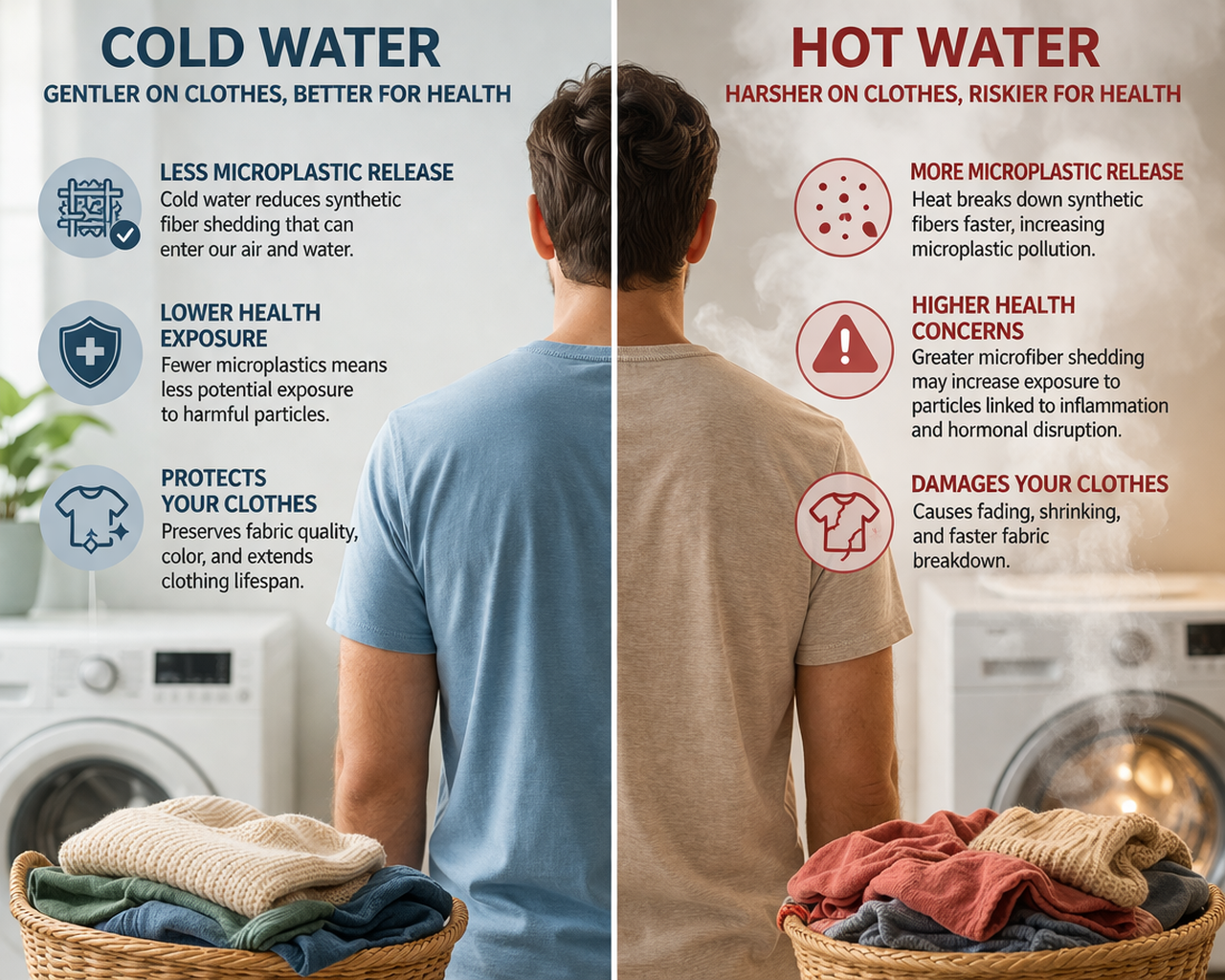
We don’t usually think about laundry as a health decision.
But it is.
New research is raising concerns about microplastics (those tiny particles released from everyday materials when exposed to heat). And while most headlines focus on food containers, there’s a big, overlooked source happening right at home:
The washing machine.
The Hidden Health Issue in Your Laundry
A large portion of modern clothing is made from synthetic fibers like polyester and nylon.
When these fabrics are washed, especially in hot water, they shed microscopic plastic particles.
These microplastics don’t just disappear.
They:
- Enter our water systems
- End up in the air
- Make their way into our bodies
Microplastics have now been found in:
- Human blood
- Lungs
- Even placental tissue
We’re still learning what that means long-term, but early research is linking microplastics to:
- Inflammation
- Hormonal disruption
- Potential long-term health risks
In short: this isn’t just an environmental issue anymore. It’s a personal health one.
Why Heat Makes It Worse
Heat accelerates breakdown.
The same way heat can degrade plastics in food containers… it also breaks down synthetic clothing.
Hot water:
- Weakens fibers faster
- Increases friction damage
- Releases more microplastics into the water
Cold water does the opposite.
It’s gentler, meaning less fiber breakdown and fewer particles released into your home environment.
What This Means for Your Home
Microplastics don’t just go down the drain.
They can:
- Linger in your washing machine
- Transfer to other clothes
- Become airborne through drying and handling
That means your laundry routine could be quietly contributing to what’s circulating in your home.
Cold Water Is the Healthier Default
Switching to cold water is one of the easiest ways to reduce exposure.
For most everyday loads, cold water:
- Cleans effectively (modern detergents are designed for it)
- Reduces microfiber shedding
- Minimizes unnecessary chemical and material breakdown
It’s a small change with real impact.
But What About Germs?
This is where people hesitate.
Hot water does play a role in sanitization, especially for:
- Towels
- Bedding
- Illness-related laundry
But here’s the key: You don’t need hot water for every load.
For everyday clothes, cold water paired with a quality detergent is more than enough.
The Tumbil Take
At Tumbil, we think about laundry differently.
It’s not just about getting clothes clean. It’s about doing it in a way that makes sense for your life and and your health.
That means:
- Using cold water for everyday loads
- Protecting both your clothes and your environment
But, while our standard is COLD water, you always have the option of requesting HOT water for certain items. When placing your order, in Special Instructions, just mention that one bag will be HOT WATER and/or DRY. When putting out your laundry, just place those items in a separate bag and mark the bag with "Hot Water". Easy. Peasy.
Because better laundry isn’t just fresher.
It’s smarter. And healthier.
The Bottom Line
Heat isn’t always your friend.
When it comes to laundry, it can:
- Break down your clothes
- Release more microplastics
- Increase unnecessary exposure in your home
Cold water helps reduce all of that.
No extra effort.
No extra cost.
Just a better way to do laundry.